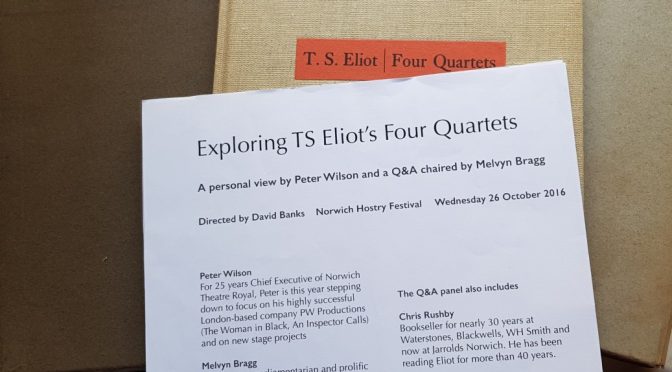
TS Eliot Four Quartets, Exploration with Peter Wilson, Melvyn Bragg & more

TS Eliot’s Four Quartets

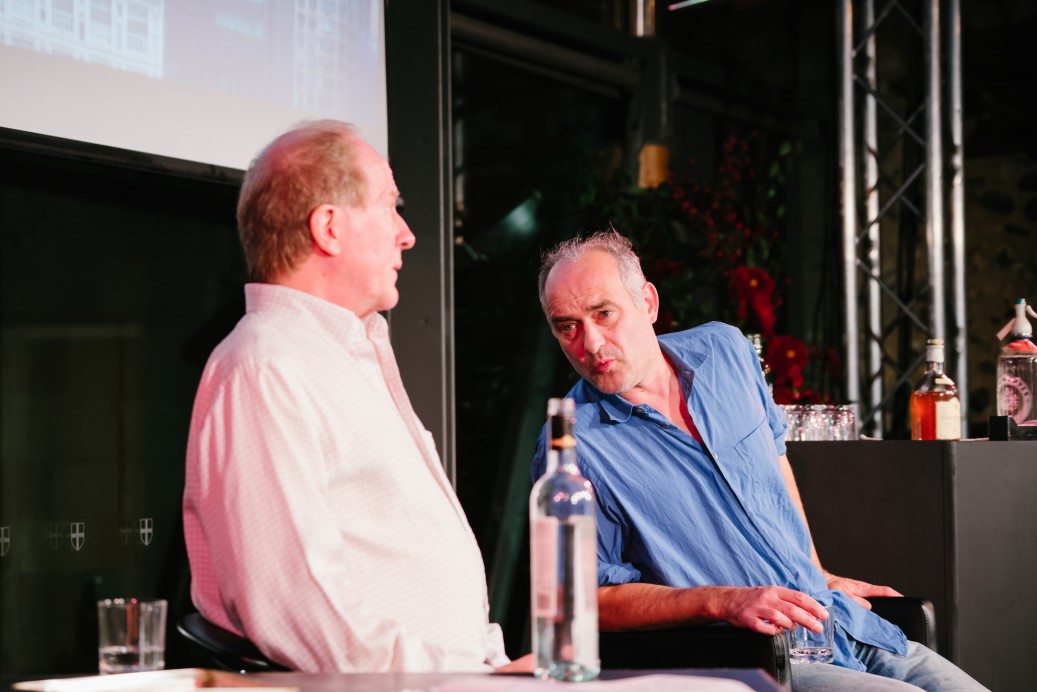
As part of the Norwich Hostry Festival, it was a privilege to both hear Peter Wilson‘s reflective rendition of the four-part poem by T S Eliot and to be on a literary panel chaired by Melvyn Bragg discussing the Four Quartets after.

“Love is most nearly itself
When here and now cease to matter.
Old men ought to be explorers…”

The full panel consisted of Peter Wilson – Chief Executive of Norwich Theatre Royal; David Banks – actor, author and director, Chris Rushby – Blackwells and Waterstones to Jarrolds bookseller and 40-year passionate explorer of Eliot; Katy Jon Went – amateur hack and commentator; and Eve StebbingEDP and Daily Telegraph theatre critic, and founder of Spin-Off Theatre.

I previously ‘paneled’ with David Banks on the Hostry Festival play discussion of his Five Marys Waiting (2012). This time I sat next to Chris Rushby, both during the poems’ reading and also during the discussion, and I think we exchanged looks after as we felt an emotional punch to the gut at the end of the recitation, which was more of a reflection and internal dialogue with self. The delivery was very personal and searching.

It’s been years since I’ve read Eliot at length – apart from Old Possum’s Book of Practical Cats (1939), probably the last time was at school! But recently I heard these lines:

“We shall not cease from exploration
And the end of all our exploring
Will be to arrive where we started
And know the place for the first time.”

They draw me back to the poem and the digging out of a 1968 Folio Society edition, in search of where they were among the lines.

Indeed, I rang my father the night before the panel, asking for the potted York Notes precis of its meaning. Needless to say, he began by quoting The Love Song of J. Alfred Prufrock (1915):

“Let us go then, you and I,
When the evening is spread out against the sky
Like a patient etherized upon a table;”

Before he could get stuck into The Wasteland (1922) and “April is the cruellest month”, I asked him to fast forward to 1935 and to Burnt Norton, the first of the Four Quartets.

Just as I expected, though, it was an emotional and sensual response that my father relayed, not a critical-academic one, and rightly so, for that was the reaction of most of us on the panel. It meant any analysis of literary and religious allusions, or of George Orwell’s criticisms at its lack of deep despair, or too much reliance on god and spirituality was somewhat redundant.

It was, however, The Wasteland, that began Eliot’s poetical-theological journey into not only Anglo-Catholicism – to which he publicly converted in 1927, but also Hinduism and Buddhism, as well as Greek philosophers and poets.

“I see the path of progress for modern man in his occupation with his own self, with his inner being” – TS Eliot

Eliot was fascinated with spiritual search and one’s psychological journey, not to mention temporal and historical reflections. Time, especially, is a recurring theme in the Four Quartets, time and not-time, time past and time future, incarnate and potentate in time present, that is:

“Time present and time past
Are both perhaps present in time future
And time future contained in time past.
If all time is eternally present
All time is unredeemable.”

Unlike the New Testament call to “redeem the time”, for Eliot, time needs no redeeming because it is not lost, it is always with us, in the moment. Indeed, Eliot’s thoughts presage modern concepts of mindfulness and being in the moment, which in turn hark back to older Buddhist appreciations.

Possibility is neither abstraction or a speculation, but an ever-present power in what already is.

“What might have been is an abstraction
Remaining a perpetual possibility
Only in a world of speculation.
What might have been and what has been
Point to one end, which is always present.”
Footfalls echo in the memory
Down the passage which we did not take
Towards the door we never opened”

Journeying is a strong theme in the Four Quartets, but one where arrival or purpose are as intangible as time.

“And what you thought you came for
Is only a shell, a husk of meaning
From which the purpose breaks only when it is fulfilled
If at all. Either you had no purpose
Or the purpose is beyond the end you figured
And is altered in fulfilment. There are other places
Which also are the world’s end, some at the sea jaws,
Or over a dark lake, in a desert or a city—
But this is the nearest, in place and time,
Now and in England.”

In all of Eliot’s expressed contrasts and even contradictions in the Four Quartets, meaning, if it can found at all, is not discovered at the poles but at the intersections.

“The tolling bell
Measures time not our time, rung by the unhurried
Ground swell, a time
Older than the time of chronometers, older
Than time counted by anxious worried women
Lying awake, calculating the future,
Trying to unweave, unwind, unravel
And piece together the past and the future,
Between midnight and dawn, when the past is all deception,
The future futureless, before the morning watch
When time stops and time is never ending;
And the ground swell, that is and was from the beginning,
Clangs
The bell.”
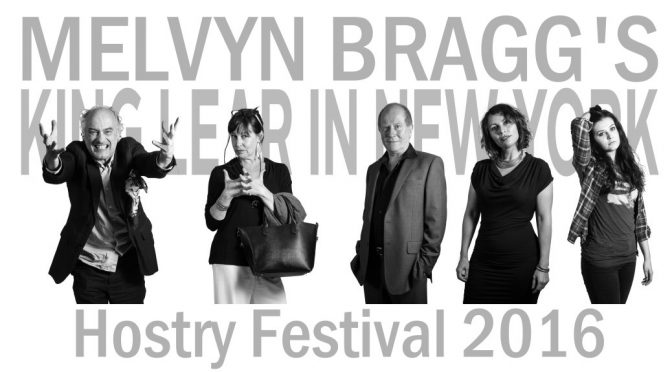
 

Melvyn Bragg’s King Lear in New York, off-Broadway Hostry Festival Norwich

King Lear in New York, Melvyn Bragg

The 2016 Hostry Festival production of the 1994 original play by Melvyn Bragg has been revised by Melvyn with suggestions by Stash Kirkbride, who directed this version, and one of the principal actors, Peter Barrow. The result is a play that positively zips along, in just 90 minutes without a break, with two outstanding performances from Louis Hilyer playing Robert and Rebecca Chapman as Jackie, who set the depth and drama of Shakespeare against the gossip and glamour of Hollywood.

Peter Barrow and Louis Hilyer in Melvyn Bragg's King Lear in New York for Hostry Festival 2016. Photo by Matt Dartford
Peter Barrow and Louis Hilyer in Melvyn Bragg’s King Lear in New York for Hostry Festival 2016. Photo by Matt Dartford

The other starring role in King Lear in New York goes to drink, for it is a dysfunctional family tragic-comedy with father, daughter, and brother, ex-wives and ex-lovers, and a prominent role for the not so on-off relationship with alcohol.

Modelled on Richard Burton’s own demons – drink and women, as Bragg admits, having also authored his biography, Richard Burton: A Life. Burton said, himself, that he turned to drink to “burn up the flatness, the stale, empty, dull deadness that one feels when one goes offstage.”

“I was fairly sloshed for five years. I was up there with John Barrymore and Robert Newton. The ghosts of them were looking over my shoulder.” – Hellraisers: The Life and Inebriated Times of Richard Burton, Richard Harris, Peter O’Toole, and Oliver Reed, by Robert Sellers, p145 (2009)

Burton of course, never played King Lear, only King John, and whilst wanting to play Macbeth to spite Laurence Olivier, in a film version, never achieved that either. This play imagines a type of Burton before opening King Lear, albeit in off-off-Broadway.

Melvyn was in town on Wednesday to see the new version and take a Q&A on it. He was asked about the cutting and editing process, that included the removal on one character in their entirety. Personally, I don’t feel the daughter’s addiction is fully sold to us, indeed there’s enough broken family angst between father and daughter, even without her addiction to drugs paralleling her father’s to drink. Melvyn was keen to present her fragility and yet, unlike Lear, portray redemption and rescue.

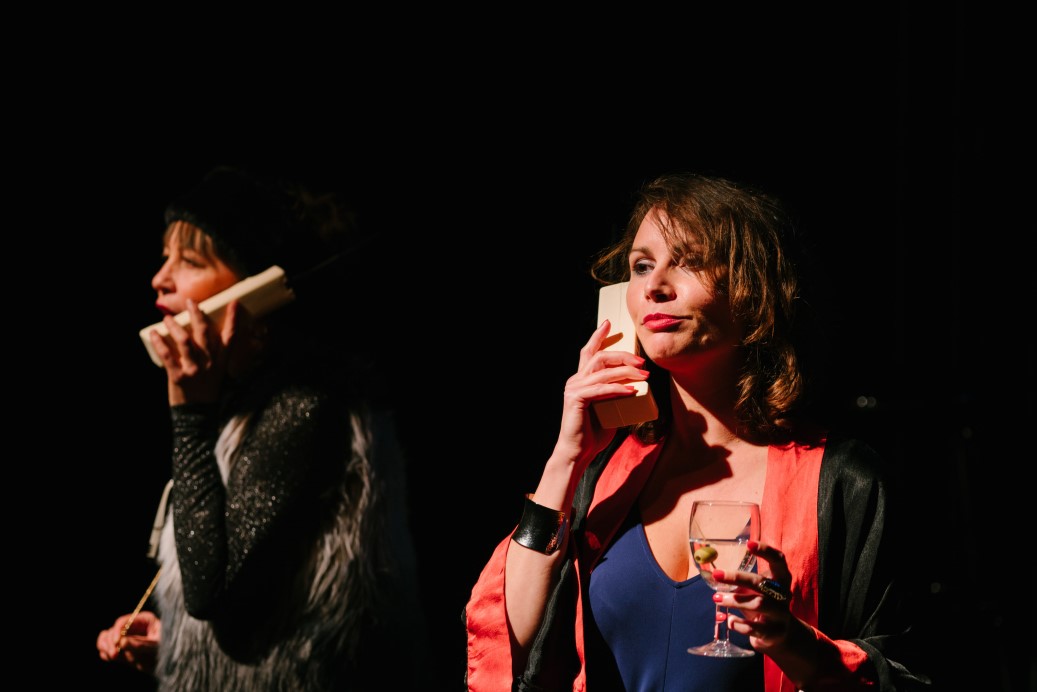
There is a cracking score of music and storm effects, projected New York backdrops, vintage ‘brick’ phones and, I think I spotted a Dalwhinnie whisky centre stage, alongside the Jack Daniels and plenty more drink besides, on the permanently-on-stage cocktail mini-bar. More likely to have been cold tea or coloured water than the marvellous amber single malt nectar. Peter Barrow holds the stage alone at first, almost making one wonder if we are watching a 1980-90s Wall Street drama.

Before any chance of settling in, there was an early dramatic entrance by Robert, amidst a cacophonic clatter and clink, rather alarming the back row, and one wondered whether this was going to be a cross between Withnail and I and Waiting for Godot, or perhaps even Whisky Galore! The entry brings wine and JD to join the already well-lubricated ‘actor-playing-an-actor’ on stage who is on the knife-edge of a return to fame or floundering as a washed-up thespian wannabe.

Nina Taylor in Melvyn Bragg's King Lear in New York for Hostry Festival 2016. Photo by Matt Dartford
Nina Taylor in Melvyn Bragg’s King Lear in New York for Hostry Festival 2016. Photo by Matt Dartford

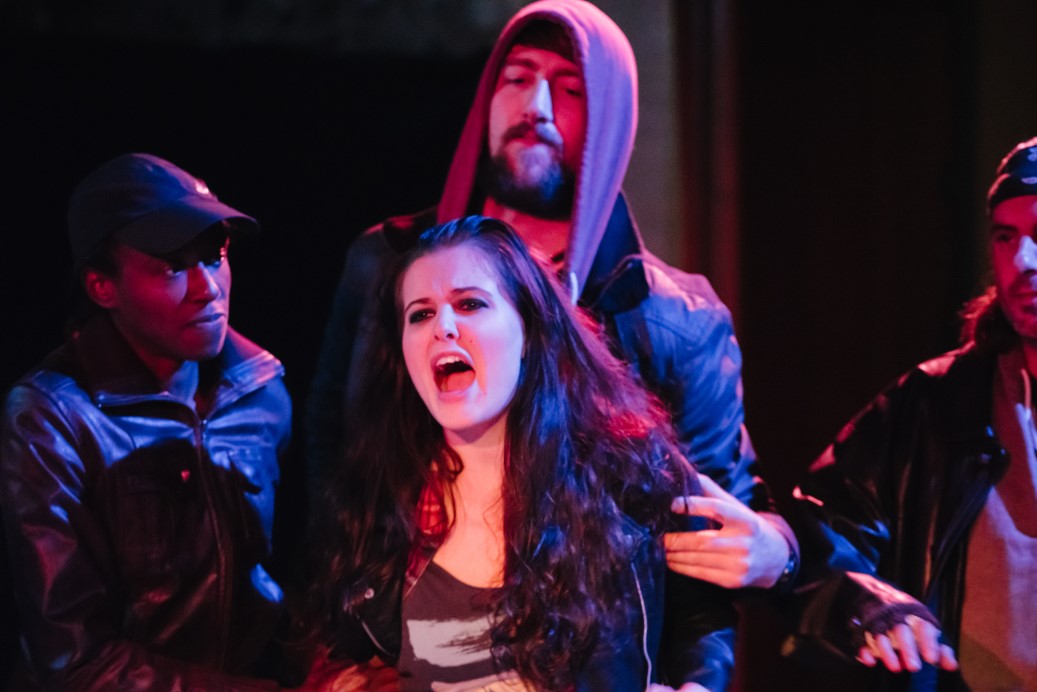
As if his drink and acting problems weren’t enough, he has broken relationships with his daughter Julie played with teen-twenty angst by Nina Taylor and ex-lovers to manage. Rebeccas Aldred and Chapman squared off with each other, arguing over Robert, his career, and his affections. Aldred was an excellent foil to Chapman, an in her role was equally torn between her allegiances and hopes for Robert.

All that, and King Lear too? A knowing audience would be left wondering how far the play within, or rather before, a play will ape Shakespeare’s own and be a full-on tragedy and no mere storm in a whisky glass.

Rebecca Chapman and Rebecc Aldred in Melvyn Bragg's King Lear in New York for Hostry Festival 2016. Photo by Matt Dartford
Rebecca Chapman and Rebecc Aldred in Melvyn Bragg’s King Lear in New York for Hostry Festival 2016. Photo by Matt Dartford

King Lear faced the challenge of dividing his realm between his three daughters, with the lion’s share going to the one who loved him most. In this play, there are more than three rival and competing loves. Dialogue and drama swing between the paternal love of his daughter, fraternal to his brother, and erotic – and there are a few good speeches about that in the play with regard to ex-lovers. Excusing his past loves as natural processes, defending the self-acknowledged Lotharian love rat that he was/is, he expounds on ‘what is love?’ Or rather, on sex – “Sex is like emptying your bladder.” Though, the full “repertoire of love [is] grander than a cathedral organ.”

Then there’s the titanic struggle between the allure of Hollywood and the age-old stage actor’s dream of Shakespearian challenge. A challenge, that the role of Robert is simultaneously tempted and tortured by, not to mention taunting by his ex-lovers. Whether an actor will ‘die’ on stage is part of the attraction he says. But one day and one death on stage would also kill his Hollywood resurrection, the others counter with. In the play’s first outing in 1994, one reviewer described Kate O’Mara in Jackie’s role as “horny for disaster”, Chapman, instead, seems to desire either his success or failure, but nothing in-between.

Life is an act. “He is him when he is most someone else”, the actor’s brother says, even the agent has to ‘act’ on his behalf. We are all the great pretenders, performing our ‘lie-dentities’. Whether in life or on the stage, we are actors in our own dramas.

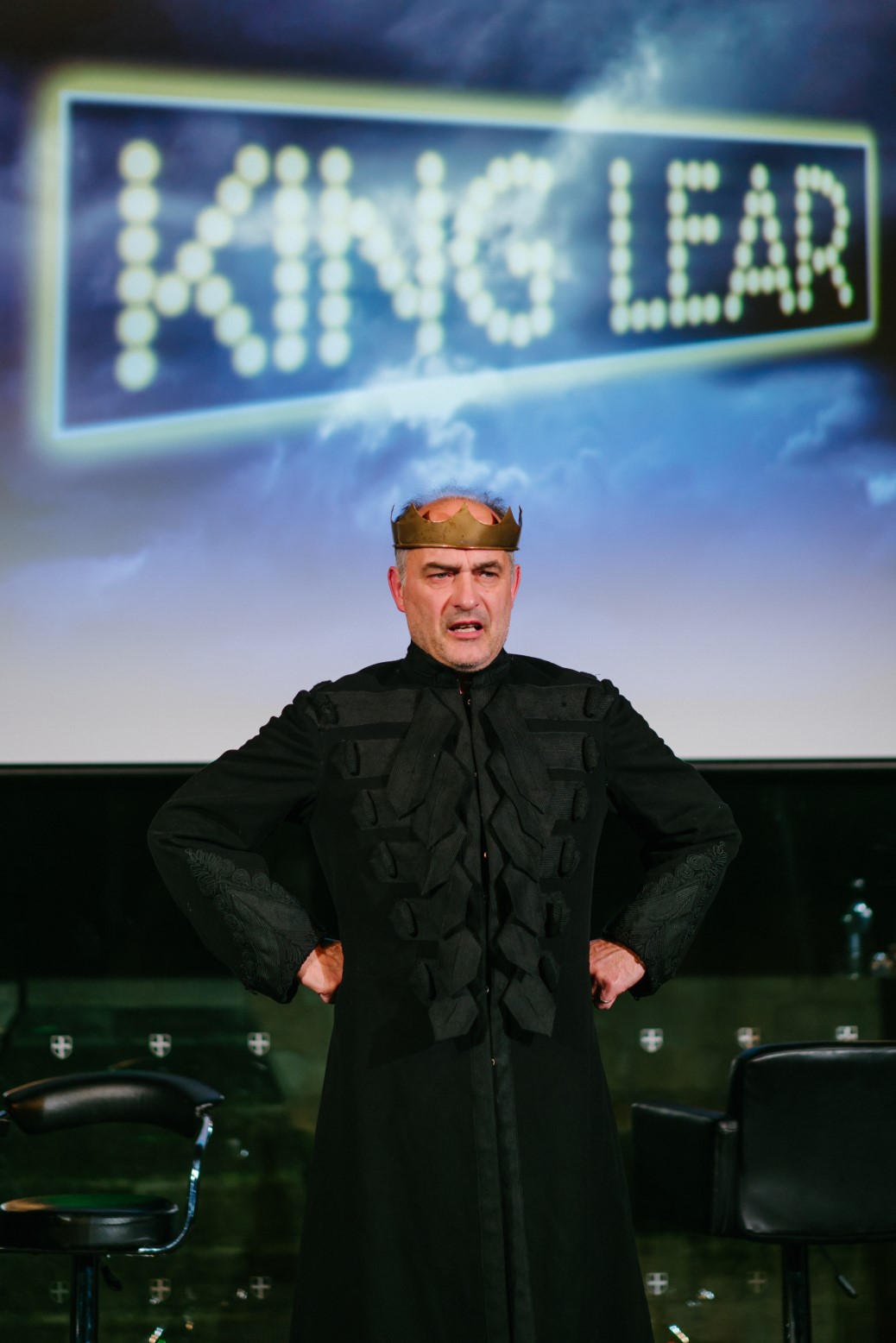
Louis Hilyer in Melvyn Bragg's King Lear in New York for Hostry Festival 2016. Photo by Matt Dartford
Louis Hilyer in Melvyn Bragg’s King Lear in New York for Hostry Festival 2016. Photo by Matt Dartford

This drama is part sitcom, part tragedy, but fully engaging. Torn between multiple loves, do we love it? In the context of the play, it might be pushing it to say addictive, but the editors seem to have got the revision just about right. Quitting Shakespeare is as hard as quitting drink, it is as much a drug to its proponents as the skin-deep glamour and glitz of Hollywood celebrity. The play expertly channels King Lear through the funnel of boozy dysfunctionality of its players. Louis Hilyer is Shakespearean and Rebecca Chapman revels in exuding the worst of Hollywood and TV chat shows, even reeling in the excellent Rebecca Aldred as Bett. The play is certainly worth a second visit after 20 years and maybe even a second visit this week. Norwich’s Hostry Festival event is certainly off-off-off Broadway, and deserves greater visibility.

Political Dystopia as UK living in Groundhog Day & Back to the Future era

UK Political Groundhog Day

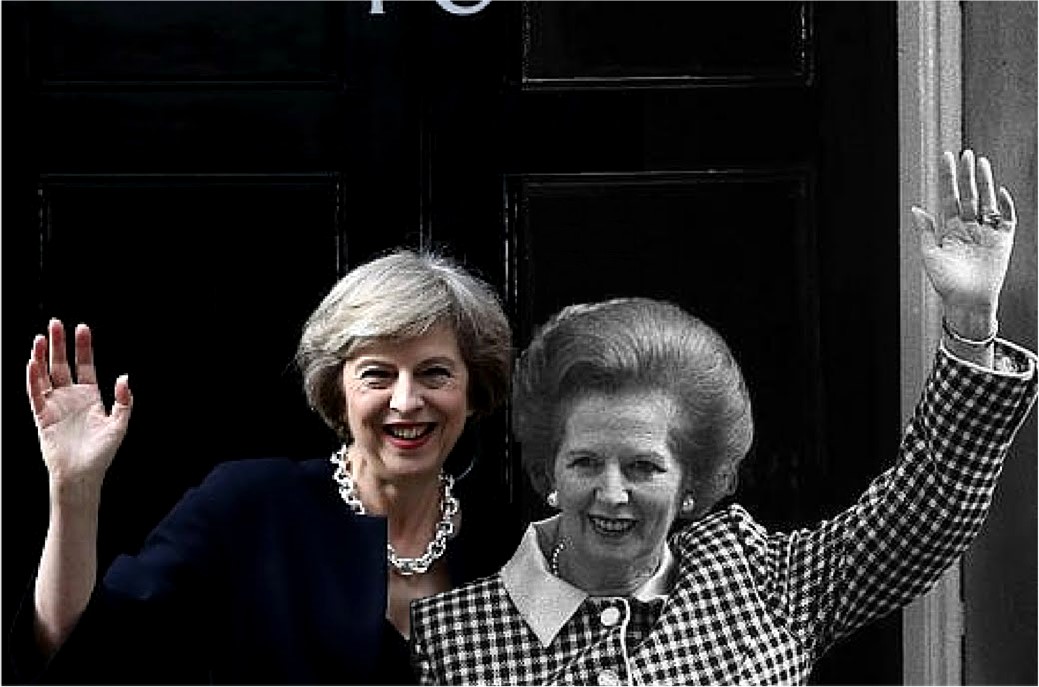
Can you believe it? Nigel Farage is back in charge of UKIP, again – for the fourth time. We also have Maggie ‘Theresa May‘ Thatcher redivivus in charge of the Conservative Party (MT/TM same initials!). Jeremy Corbyn is also the second leader Labour has had in a year. OK, so the previous one was also Jeremy Corbyn! I feel like I’m living in political Groundhog Day.

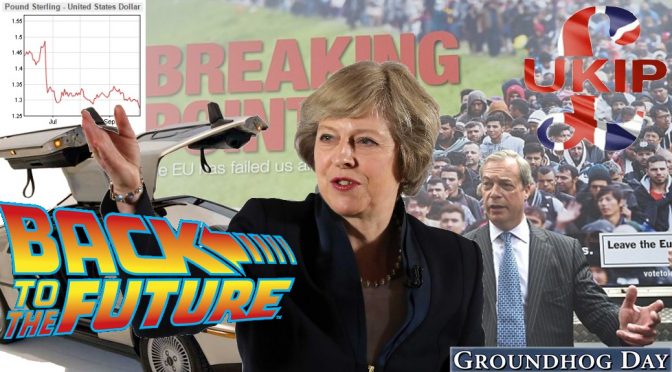
Theresa May Margaret Thatcher Number 10 Composite

UKIP’s fourth-time-around leader

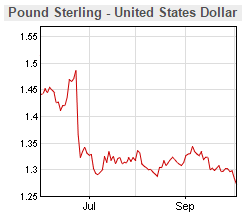
UKIP saving the Pound
UKIP saving the Pound, one cent devaluation at a time!

Admittedly, or allegedly, only a temporary reversion, but after Diane James’ 18-day stint as leader, Nigel Farage has returned to the helm of UKIP.

“UKIP without a leader is more electable than Labour with one” – Nigel Farage

Neil Hamilton as an alternative UKIP leader, currently leader in the Welsh Assembly, would be a “horror story” say Farage and Hamilton in a comical show of unplanned unity.

Financial Markets and Economic Prospects

GBP v USD 2016 post-Referendum Exchange Rate

And whilst the FTSE-100 reaches new heights for the multinational wealthy with shares and global reach, the Pound is crashing towards Sterling parity with the Dollar ($1.27) and ignominy with the Euro (€1.13).

Back to the Future over the EU

John Major launched his fatal Back to Basics political message and policies in 1993, but Theresa May’s message feels more like back to the 80s or even the 70s – before 1973 when we joined the EU. Now we are leaving it. When we joined, Britain was keen to avoid creating a rift between pro and anti-Europeans:

“Above all we should avoid creating a new, semi-permanent rift in British society, between pro and anti Europeans.” – The Guardian, 1 Jan 1973

Post-Referendum and with Brexit’s Article 50 due to initiate by March 2017, we have created exactly that with a very divided and divisive 48% Remainers and 52% Leavers society.

Currency falling backwards and downwards

DeLorean Back to the Future DMC Car
DeLorean Back to the Future DMC-12 Car

The Pound has only been this low once before in 60 years, back in 1985, when Back to the Future was released and the already defunct DeLorean (1983) was ironically the posited future of flying cars and time machines. In fact, without any irony at all, DeLorean or rather the new DMC is making fresh models of the DMC-12 car this year!

Recreating the Past rather than a Future

We seem to be recreating the past, rather than an inclusive or “brighter future” for all of Theresa May’s talk about injustice and inequality – because it’s selective inequality she’ll help, and selective education she’ll promote. And if, we can’t trust Nigel Farage to actually resign, Boris Johnson to keep on message for longer than 4 days (Theresa May’s joke at the Tory Party Conference, 5 October 2016), how can we trust that “Brexit means Brexit” or hope that it doesn’t. We seem to be living in the past, having chosen to withdraw from European cooperation and community, back to tariffs and protectionism, back to a low Pound, xenophobic racism and divisions, and peddling failed political slogans that could have been ripped from 1970s/80s politics and posters – indeed during the Leave EU campaign some were. Theresa May, in her speech, ridiculed ‘citizens of the world’, as many Remainers describe themselves, as citizens of nowhere, even if it was in the context of criticising global corporations:

“If you believe you are a citizen of the world, you are a citizen of nowhere. You don’t understand what the very word ‘citizenship’ means.” – Theresa May, Conservative Party Conference 2016 (speech in full)

This reminds me of George Orwell’s dystopian idea of citizenship in 1984! As for me, I’m a #proudcitizenoftheworld:

As was discussed today on TalkRADIO, for which I was interviewed, we are in dangerous territory here, using jingoistic language to appease the right whilst seemingly stealing centreground policies, but only for the few who are hard-working British citizens, not the “low skilled immigrants”. Immigrant wealth-creators are welcome but not “wealth consumers“, said Liam Fox at a fringe event. So that’s no more asylum seekers or refugees then?

Theresa May also turned the tables, saying that now Labour is the “supporting voices of hate…the nasty party”. Yet her language is more reminiscent of UKIP’s xenophobia than any kind of utopian equality. Even The Times said of her speech that “The Tory conference was largely immigration policy by Ukip.” It’s a scary future not a bright future we are being presented with.

Got the Brexit Blues? Lost your Pink Beret! Reckon Orange is the new Black?

March for Europe, Paint it Blue

Yesterday, around the UK, from London to Edinburgh, Birmingham, Oxford and Cambridge, tens of thousands marched for Europe in an attempt to #paintitblue ahead of parliamentary discussion of the 4-million-plus second referendum petition. Peter Tatchell joined the march and Eddie Izzard, in high heels, gave chase

Orange is the New Black

Meanwhile, Theresa May was away in orange declaring to the US and China that “Brexit means Brexit“, “Free trade means free”, and Britain’s independence would be great – how quick they change their tune, or rather outfits?

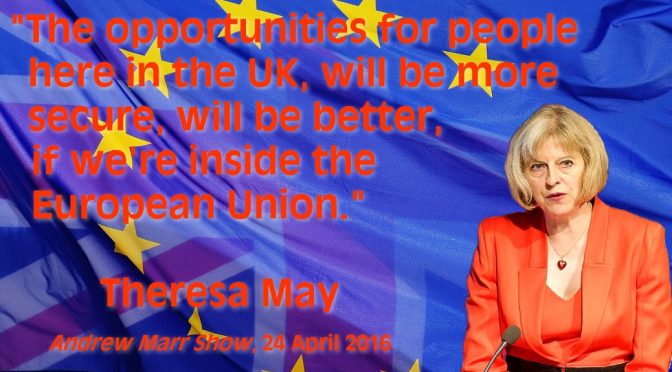
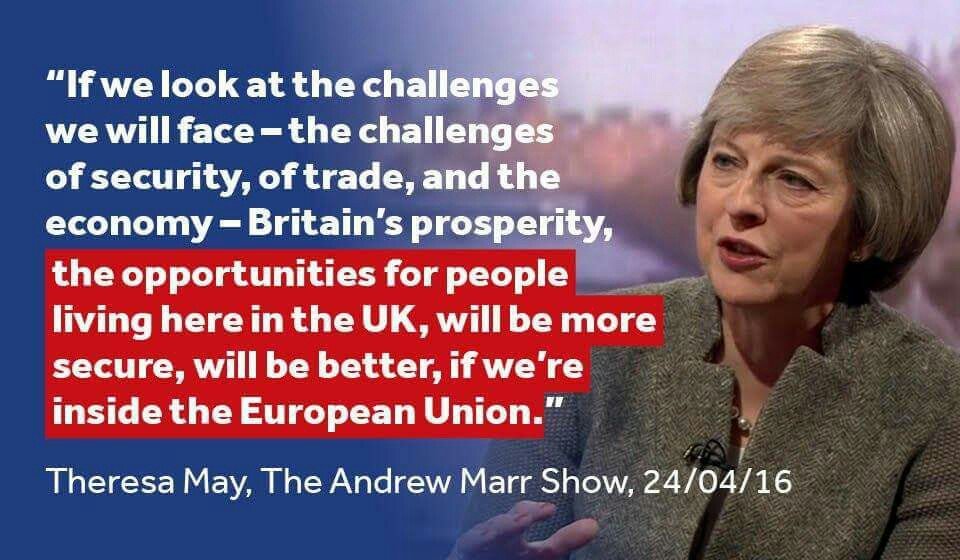
Theresa May - "Better off in the European Union"
Theresa May – “Better off in the European Union”?

Political Language turning the air Blue

“Political language… is designed to make lies sound truthful and murder respectable, and to give an appearance of solidity to pure wind.” – George Orwell

In an article in the Economist about how Republicans and Democrats in the US use political language, it was asserted that liberals try to talk facts and policies whilst conservatives are unafraid to aim for the gut.

“…conservatives use language more effectively than liberals in communicating their deepest values” – George Lakoff, The Little Blue Book: The Essential Guide to Thinking and Talking Democratic

The language of politics has also become the toxic language of hate, turning the language of the streets, rallies and even political advertising, blue – not pro-EU, but xenophobia and anti-immigrant fear and racism, both leading up to and since Brexit.

All Black takes on Pink Beret

In other news, europhile Eddie Izzard in hat and heels had his pink beret “headgear stolen near Downing Street by a man dressed in all black with a balaclava covering half his face. Despite wearing high heels, Izzard gave furious chase as police caught the man and tore back his beret while he was pinned to the floor. He then dusted off the pink garment and placed it back on his head before marching to Parliament Square.” – Guardian

Eddie Izzard said: “There was one guy… he went up and snatched my beret – which has a British flag and an EU flag on – and he marched off, he stole it.” The comedian said of the police that they “did fantastic”:

“…there was an inspector, some other officers in there, they took him down. I got my beret back, but it’s gone off as evidence – my beret is now in evidence. I’m out, transgender for 31 years and if anyone steals my pink beret, I’ll get it back.” – BBC

Just to keep things serious, here’s The Pink Berets from the movie Hop (2011):

Political Fashion

Now let’s stop obsessing about what trans people or female politicans wear and get back to what really matters. Oh ok, here’s a quick survey of what female leaders are wearing this season, Eddie – get on trend!

WLMHT to let go of Charing Cross Gender Identity Clinic NOT to close it

Charing Cross Gender Identity Clinic NOT closing

The West London Mental Health Trust (WLMHT) has issued a statement and then after mass trans patient panic (well a few of us!) has clarified it. The Gender Identity Clinic at Charing Cross Hospital (CX GIC) is not to close but to seek new NHS England oversight, preferably not under the auspices of mental health care. This is both unnerving for existing patients on the long waiting lists and potentially radical.

The Charing Cross Gender Identity Clinic is, in their own words, “the largest and oldest clinic of its kind dating back to 1966”. The same year that Harry Benjamin published “The Transsexual Phenomenon“.

UPDATE: It has been confirmed that from April 2017 the Tavistock and Portman NHS Foundation Trust will take over the management and funding of the Charing Cross GIC, without its location changing. The T&P NHS FT also run Tavistock GIDS, London (child and adolescent service).

Tavistock and Portman NHS Foundation Trust

NHS Hospital Cuts

All this comes the same day the NHS has announced further cuts in a spiralling financial crisis – the biggest in its history, requiring the euphemistically named “sustainability and transformation” plans, in other words, “cuts”.

“We are seeing more and more pressures on staff trying to run harder and harder. We are reaching breaking point.” – Chris Hopson, Chief Executive of NHS Providers

West London Mental Health Trust statement

The Gender Identity Clinic at Charing Cross plays a leading role nationally and internationally in helping people experiencing gender dysphoria to feel more comfortable in their own bodies.

West London Mental Health Trust (WLMHT) is incredibly proud to have been at the forefront of developing gender identity services during a period in which societal attitudes and understanding of this issue has improved so vastly, and that the Charing Cross GIC and its staff have, since 1966, helped nearly 7500 people to lead happier, healthier lives.

Demand for gender identity services has risen sharply in recent years as society has grown more understanding and awareness of NHS services has developed. This has been challenging for the clinic and resulted in waiting times that are longer than we would like. However, the clinic’s staff have continued to invest huge amounts of energy and, working with NHS England, have made great strides in bringing these waiting times down while still providing a service which is rated highly by patients.

However, as WLMHT moves forward it is necessary to refocus the services that we provide. The Board has made a decision that the medium-term strategic focus for the Trust will be to develop mental health services, physical care and integration between the two.

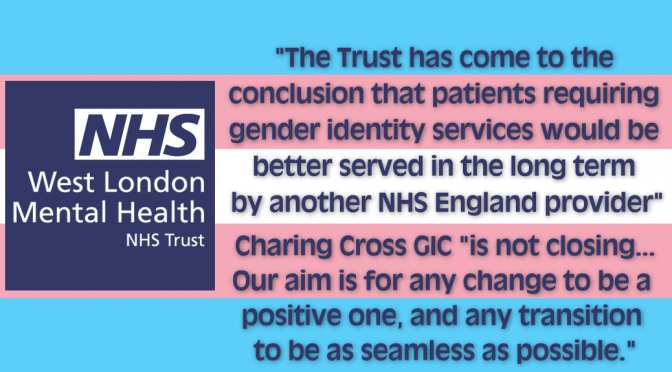
As a result, the Trust has come to the conclusion that patients requiring gender identity services would be better served in the long term by another provider, and has therefore served notice on our contract to NHS England.

We know that many of the patients we see at the GIC are at difficult times in their lives and that this announcement may cause alarm; we would therefore like to offer the following reassurances:

  • This does not mean services are stopping now – we will continue to provide services as normal until such time as a new provider is able to take over; this is likely to be at least six months.
  • Patients from London and the South East will not be left without services or have to travel much further – NHS England as the commissioner for gender identity services will find a suitable alternative provider as quickly as possible.
  • Patients will not have to start their treatment all over again – continuity of care for our patients is the number one priority for clinic staff. GIC staff will work closely with NHS England and a new provider to ensure disruption to treatment is kept to an absolute minimum.
  • This does not mean we will let services deteriorate – WLMHT and the GIC will continue to deliver on plans we have developed with NHS England to improve access to and quality of services while it continues as the provider.
  • We will not reduce staffing levels – while we remain the provider of this service we have an obligation to ensure there are sufficient qualified staff to maintain and continue improvements in access and quality.
  • We will ensure a smooth handover to the new provider, working closely with our colleagues at the GIC and NHS England

Dr James Barrett, Lead Consultant at the Gender Identity Clinic (GIC), on behalf of GIC clinicians, later clarified:

The gender identity clinic is not closing. To clarify, we clinicians have long felt that West London Mental Health Trust is not a good fit for the unique and specific service we provide (the vast majority of those we see are not mentally ill).

“Increasingly, we feel our patients would be better served by us if we worked somewhere better able to support and develop a more tailored approach to gender.

“There are a number of options in terms of alternative providers. We would not make any move unless confident that patient care would be markedly improved.

“Until that point, current arrangements will still apply. Our aim is for any change to be a positive one, and any transition to be as seamless as possible.”

CX GIC psychiatrist, Dr Stuart Lorimer, sought to reassure people:

NHS Transgender Waiting Times

Waiting times for first appointments at the Charing Cross GIC are currently around 12 months from the initial referral but can often take 3-7 years in total, when you include surgery which only takes place after two psychiatric approvals and a pre-surgical assessment.

Referral times are not only a postcode lottery but constantly change – both up and down, according to staffing, and ever-increasing transgender service user demand. Norwich, alone, refers 50-60 adults a year not including the dozens of trans teens not yet in the adult system. It recently shifted its gender dysphoric population from Charing Cross to Nottingham GIC, having also, in the past, used Dr Richard Curtis’ TransHealth in London.

UK Trans Info has an excellent resource offering waiting times and estimated trans population surveys of all the GICs every three months. Last year Leeds were quoting 4 years for first appointments and Sheffield over 18 months! Nottingham’s 8 months has risen to 12 and now 18-19 months.

“Nottingham’s GIC saw the most marked growth, with a 2800% increase from 30 referrals in 2008 to 850 in 2015. More than 1000 are expected this year.” – Pink News

UK Trans Gender Identity Clinics

There are 7 adult and 1 adolescent-teen GICs in England, serving England and Wales – Wales has none of its own and London’s Charing Cross GIC also serves them.  The Tavistock and Portman is the sole young person clinic in England, based in London, but with clinics in Exeter and Leeds.

Scotland has 4 adult and 1 adolescent clinic. Belfast Health and Social Care Trust runs an adult and separate “Knowing Our Identity” (KOI) service for children and teens.

For a full list and contact details see GenderAgenda’s UK GICs page.


Hostry Festival’s 2016 Norfolk Arts Awards – EDP People’s Choice Award

Norfolk EDP People’s Choice Awards

Today, Tuesday 23 August, is the last day to “nominate your stars of Norfolk‘s arts scene” for a special EDP People’s Choice Arts Award. The deadline for submission is midnight to put forward your favourite community or corporate arts organisation, artist, or event.

Nominate EDP People’s Choice Norfolk Arts Awards NOW

2015’s Norfolk Arts Awards saw 6,000 votes and winners included artist Matt Reeve, Norwich Arts Centre and GoGoDragons!

Over the last year have you loved an art exhibition at St Margaret’s Church of Art – e.g., Pride Without Prejudice, or Asylum at the Undercroft Gallery, or the Sainsbury’s Centre? Did you enjoy Paint Out‘s artists roaming the streets of Norwich and Wells-next-the-Sea? What about the 2015/16 programme of plays at the Maddermarket Theatre? Nominate your favourite Norfolk arts event.

Hostry Festival Innovation

The Norfolk Arts Awards is the Hostry Festival‘s red carpet gala event celebrating the arts. It’s really an opportunity to celebrate people who make a difference. The EDP People’s Choice Awards is a chance for people to have their say and nominate their own stars for the award. The top 10 in each category will be revealed and then there will be an online vote to find three winners. Winners will be announced at the Norfolk Arts Awards ceremony at Norwich Cathedral’s Hostry on Friday 21st October.

Norfolk Arts Awards 2016

Hostry Festival Norfolk Arts Awards EDP 2016

The Arts Awards consist of 15 awards, with 30 nominations and celebrate the rich and diverse world of arts and culture in Norfolk. The EDP People’s Choice Award features 3 categories and nominating arts groups or individuals for the public vote closes Tuesday 23rd August – it is your chance to have your say by recommending an arts project, organiser or artist for their creative work in Norfolk.

Check out the interview with the event’s co-founder, Stash Kirkbride, on BBC Radio Norfolk (from 3h34m).

“Nominations have already been flooding in for this year’s awards, and people have until Tuesday, August 23 to send in their entries. Once again there are three EDP People’s Choice Awards categories – individual, small organisation and large organisation.” – Emma Knights, EDP

This year the awards are returning to the Hostry building at Norwich Cathedral, held on Friday October 21st 2016, 7-9.30pm with after show canapes and champagne reception.

Nominate EDP People’s Choice Norfolk Arts Awards NOW

Full List of 2015 Arts Awards Nominees

Individual Artists who went through to the public vote:

Small Venue, Organisation, Festival who made the public vote:

Large Venue, Organisation, Festival reaching a large number of people who went to the public vote:

Is Utopian PostCapitalism post-NATO post-Brexit Society Possible?

Economics & Society – the next big ‘ism

I hate ‘isms, whether capitalism or communism, neoliberalism or even postcapitalism. I also dislike ‘ities, whether cities or christianities – for there are thousands of incarnations of both. I prefer the land and environment of the countryside, not high-rise development living on top of each other, aspiring to the penthouse apartment, swarming like bees to a square mile of golden honey, gold handshake, gilded lifestyle of the 1 per cent. History has led us ever closer to each other in terms of where we live, with population expansion and the pressure to move towards the capitalist and industrialist means of production. Will the age of the Internet allow us to live out self-employment part-time creative dreams?

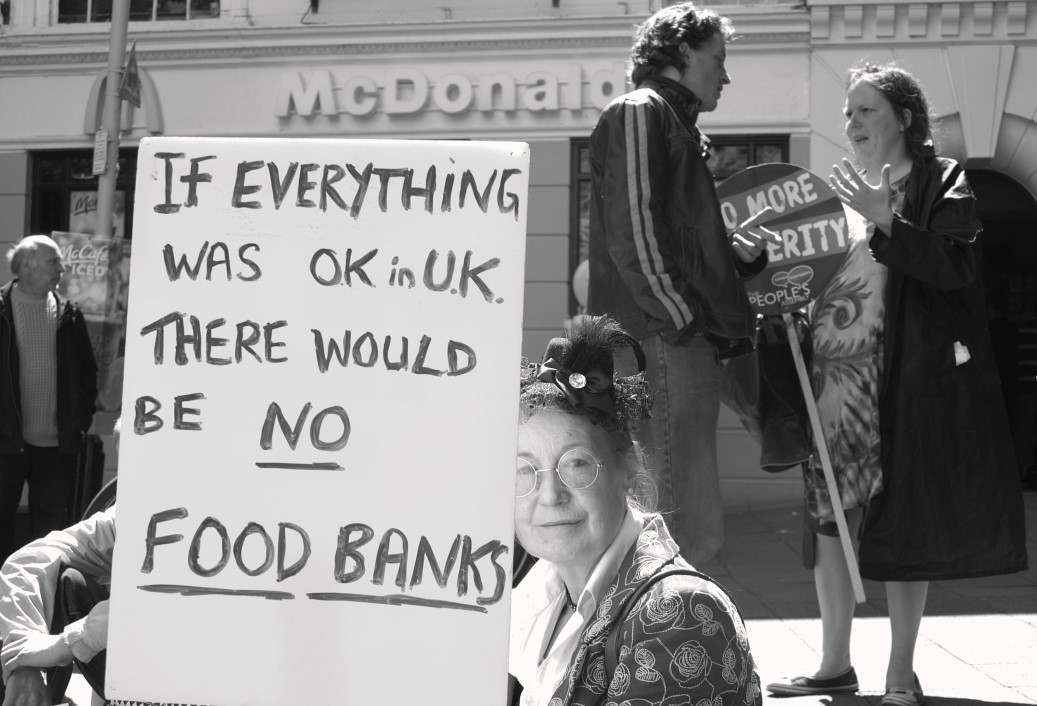
Norfolk Peoples Assembly Anti-Austerity Demo, Norwich Haymarket, 30 May 2015
‘Inequality’ – Norfolk Peoples Assembly Anti-Austerity Demo, Norwich Haymarket, May 2015

The EU – Peace & Prosperity in our time?

Will modernity bring or sustain peace? The European project, the EU, has been an ever expanding union in terms of peace, even prosperity perhaps, until the crash of 2008/9 affected us all as we shored up banks and capital but not people and livelihoods. Whilst the UK marginally voted to leave the European Union, assuming “Brexit means Brexit” as Theresa May so simply and yet evasively said, it is undeniable that however lumbering a bureaucratic behemoth ‘Brussels’ is, it has been on balance a force for good. The UK, well England in the main, recoiled nonetheless against ever increasing fiscal and foreign policy union.

NATO – “One for all and all for One”?

As with a nuclear “deterrent”, have defence pacts really saved us from wars? Arguably, NATO‘s 28 nations are neither at war with each other and would, in theory, defend each other against external aggression. In principle, at least, for Jeremy Corbyn has expressed his doubts and previously said that NATO only furthers capitalist self-interest and has had its time.

“I don’t wish to go to war. What I want to do is achieve a world where we don’t need to go to war, where there is no need for it. That can be done.” – Jeremy Corbyn

Who can disagree with that? Yet, the media focus is on the possible breaking of NATO Article 5 pledges instead. His words are idealistic rather than realistic but where would we be without ideals?

Capitalism and PostCapitalism?

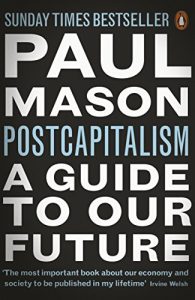
In his 2015 book, Postcapitalism, Paul Mason argues, along with the OECD, that “the best of capitalism is behind us” and that with decreasing returns for the many inequality will rise 40%, as the few batten down the hatches. What lies beyond a breaking capitalism, not neoliberalism, for sure.

“Is it utopian to believe we’re on the verge of an evolution beyond capitalism? We live in a world in which gay men and women can marry, and in which contraception has, within the space of 50 years, made the average working-class woman freer than the craziest libertine of the Bloomsbury era. Why do we, then, find it so hard to imagine economic freedom?

Postcapitalism - Paul Mason, Penguin 2015
Postcapitalism – Paul Mason, Penguin (2015)

… All readings of human history have to allow for the possibility of a negative outcome… But why should we not form a picture of the ideal life, built out of abundant information, non-hierarchical work and the dissociation of work from wages?

Millions of people are beginning to realise they have been sold a dream at odds with what reality can deliver. Their response is anger – and retreat towards national forms of capitalism that can only tear the world apart. Watching these emerge, from the pro-Grexit left factions in Syriza to the Front National and the isolationism of the American right has been like watching the nightmares we had during the Lehman Brothers crisis come true.

We need more than just a bunch of utopian dreams and small-scale horizontal projects. We need a project based on reason, evidence and testable designs, that cuts with the grain of history and is sustainable by the planet. And we need to get on with it.” Paul Mason

Putting the Human where Capital once was

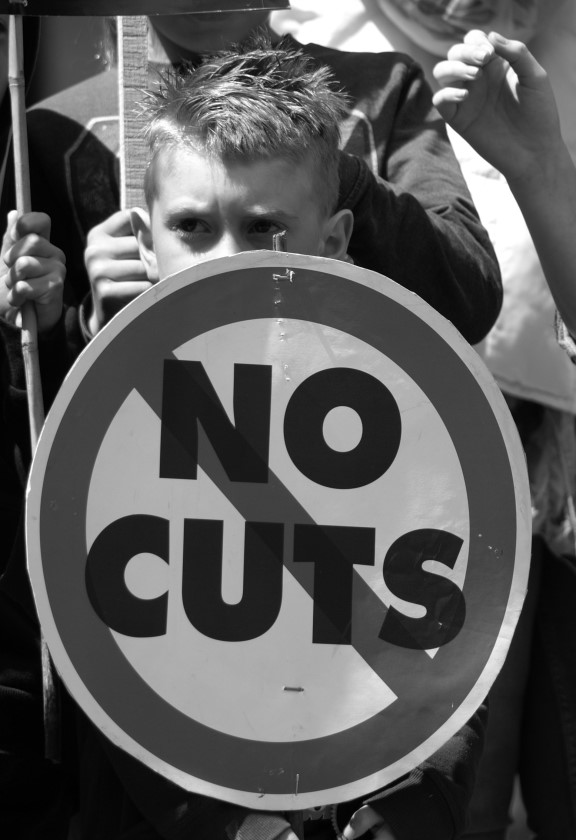
Norfolk Peoples Assembly Anti-Austerity Demo, Norwich Haymarket, 30 May 2015
‘No Cuts’ – Norfolk Peoples Assembly Anti-Austerity Demo, Norwich Haymarket, 30 May 2015

Humanism begins well, with human, but ends in another ism. An upside down society, as suggested by Jesus, where the last are first, the migrants welcomed, the poor ‘last hour workers’ paid well, the sick, disabled or mentally unwell treated with care, dignity, and respect, is possible. If, we choose to create it.

But it takes an ‘us’ not a ‘me’. So many recoil at immigration because of a perceived threat to self, status, employment, a drain on health or schooling. Yet migration is what history and evolution are all about, the development and expansion of humanity. Again, like humanism, humanity puts human beings first and then ends with an ‘ity’, another intangible unified concept, a utopian ideal that lumps us all as one, without recognising our differences, diversity and distinction – the very things that when accentuated create mistrust and tribal misanthropy.

I prefer the word humankind, for it is only in being kind, being kindred, perpetuating random acts of kindness towards our fellow human beings – recognising their ‘being’ and right to ‘be’ that we can coexist, cooperate and create a humane society together.

We are all migrants – Norwich Solidarity Rally with International Immigrants

Norwich Migrants Solidarity Rally

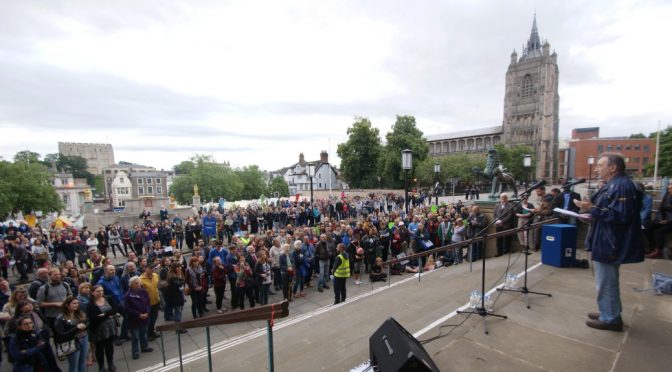
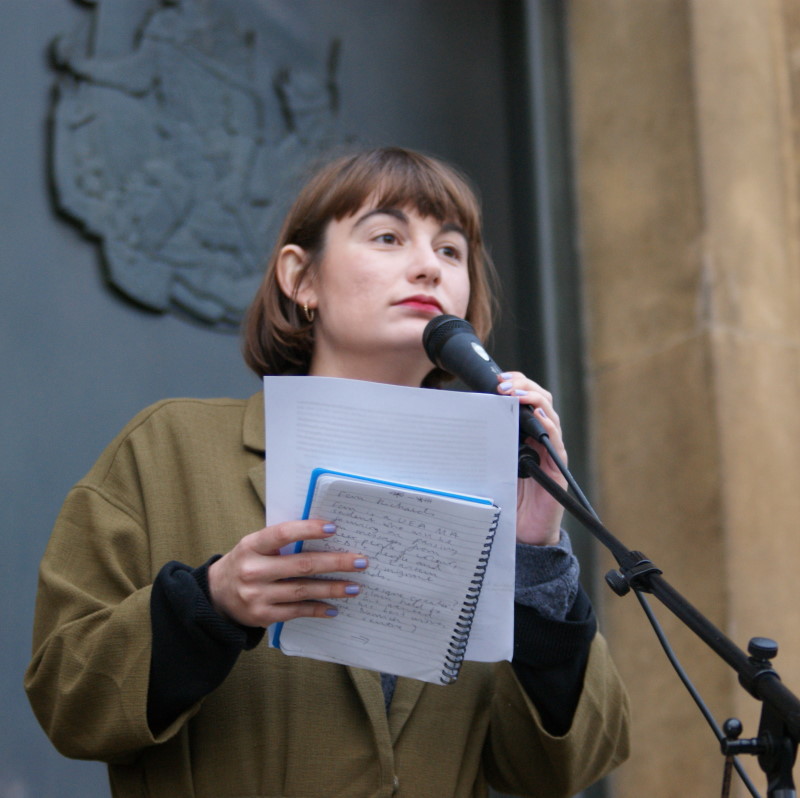
Rebecca Tamás organised a rally of over 400 people on 12 July outside Norwich City Hall, with a dozen speakers across cultures and continents, writers, politicians, faiths, artists, academics and activists, as well as the daughter of the Eastern European village shop on Magdalen St that was arson attacked on 8 July. The purpose of the gathering was to affirm the city’s welcome of migrants, refugees and all its international communities. Norwich is a city of refuge and literature to everyone with a story, a safe place for future chapters to unfold, even if there are isolated incidents of hate or racism, Norwich remains a fine city where the community responds to hate with love, to darkness with light.

Rebecca Tamás organiser and speaker at Migrants Rally, 12 July 2016
Rebecca Tamás organiser and speaker at Migrants Rally, 12 July 2016 – more event photos here

Hungarian-British UEA PhD student and organiser of the rally
Rebecca Tamás described the event as:

“a testament to the power of love and inclusion” – UEA Concrete, interview

In the same post-rally interview I said that:

“Nobody can say there’s even such a thing as ‘English’, let alone ‘British’ or anything else: we are already a melting pot of different cultures and backgrounds, bloodlines and everything. But it’s about, even more than ever, despite that background, recognising that we are part of a global village. And it is this bigger picture we often miss: the fact that we are all human beings whose duty it is to always watch out for our fellow humans… at the end of the day, it is about stories, we have personal stories and people have community and country stories, but it’s having the freedom to have your own story, the freedom to then tell that story to others, to be heard and to be recognised.” – UEA Concrete, interview

We are all migrants. We are all story-tellers. We are all humans. We deserve the same opportunities, the same love, and the same respect. And, at the end of the day, it really is as simple as that.

Hate is taught and caught, not born with, children begin life accepting everyone until we teach them otherwise, it is good for, particularly young people, to be out demonstrating a positive response to diversity and difference, rather than the rise in xenophobia and hate crime witnessed post-Brexit vote.

Event Speakers

  • Katy Jon Went, writer & diversity activist (full transcript below)
  • Marcia X, UEA
  • George Szirtes
  • Samantha Rajasingham
  • Dr Becky Taylor, UEA
  • Pa Musa Jobarteh of BridgePlus
  • Fern Richards, UEA
  • Mohammed Ameen from Chapelfield Mosque
  • Annie Henrique from Norwich Liberal Synagogue
  • Tim Hughes from Stand up to Racism.
  • Rebecca Tamás, UEA
  • Cllr Alan Waters, Leader of Norwich City Council
  • Clive Lewis MP for Norwich South – by message

An excellent summary of each speaker’s main points can be found on Tony Allen’s blog.

Text of my opening speech

Speech download as PDF

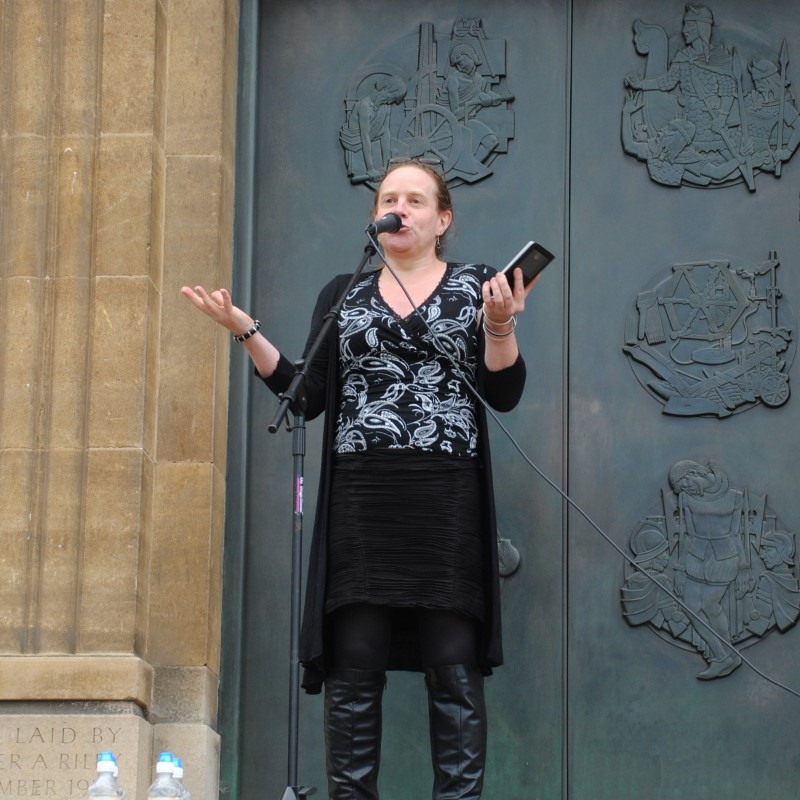
Katy Jon Went speaking at Norwich Solidarity With Migrants Rally, 12 July 2016
Katy Jon Went speaking at Norwich Solidarity With Migrants Rally, 12 July 2016 – more event photos here

The UK and, indeed, East Anglia have long traditions of immigration. We currently have some 8 million foreign-born people in the UK, about 1-in-8 of us. But, more than that, many of us, if not recent migrants, have Roman, Viking, Norman, Saxon, Dutch, African, Caribbean or Indian ancestors.

Ironically, Brexit Boris Johnson has Turkish and Franco-German ancestry and was born in the USA so is included in that 8 million figure! Unless you want to class bombastic British Boris as foreign, the actual number is nearer to 5 million, or about 1-in-12 people.

Whatever the figures, though, the important thing to recognise is that we live in a global community, locally expressed.

It is community cohesion and communication we need to build to counter fear, hate, and prejudice.

My partner is Dutch and my family name has Dutch emigrant roots. In the 16th century Norwich welcomed Dutch and Flemish ‘Strangers’ till they made up a third of our population, bringing new skills that enhanced our then status as England’s second most prosperous and prestigious city.

Before that, back in the 12th century, Norwich was 7% Jewish but after the killing of a teenager, posthumously to become St William, that was falsely blamed on the local Jews, and so began the Blood Libel. A persecution and killing of Jews that spread across East Anglia and to Europe, from our fine city of Norwich. By the end of the 13th century all remaining Jews had been expelled from Britain.

In addition, slavery, empire, and commonwealth’s, often coerced, contributions to wars, trade, and labour, mean that Britain’s success owes a moral debt to people from around the world. Economically we have, and continue to thrive on, migrant people’s hardworking and entrepreneurial spirit. Economic studies show that immigration is a net benefit, that immigrant people are more likely to be in work or starting their own trades, paying tax, and not claiming benefits, than people of longstanding British heritage.

Whether people come to Britain fleeing war, terrorism, homophobia, transphobia, or poverty, they are all fleeing a threat to life, liberty, or livelihood. Even poverty is a slow death and until #Brexit we were the 5th most wealthy economy in the world after Germany which has twice the percentage of migrant background population. We are fully able to sponsor and support asylum seekers, refugees and even so-called economic migrants.

What we have to do is engage with British communities that bear the greatest new influxes so that integration is successful. London with over a third foreign national origin people is a successful example after more than 60 years of immigration, Boston and Great Yarmouth, among others, need time to adapt.

That means that grants and benefits need to fall upon domestic as well as international communities in those areas. It means increased spending on schools, the NHS, and community services, not austerity which falls hardest upon the poor. Doing this will reduce societal division, fear, hatred, jealousy and suspicion.

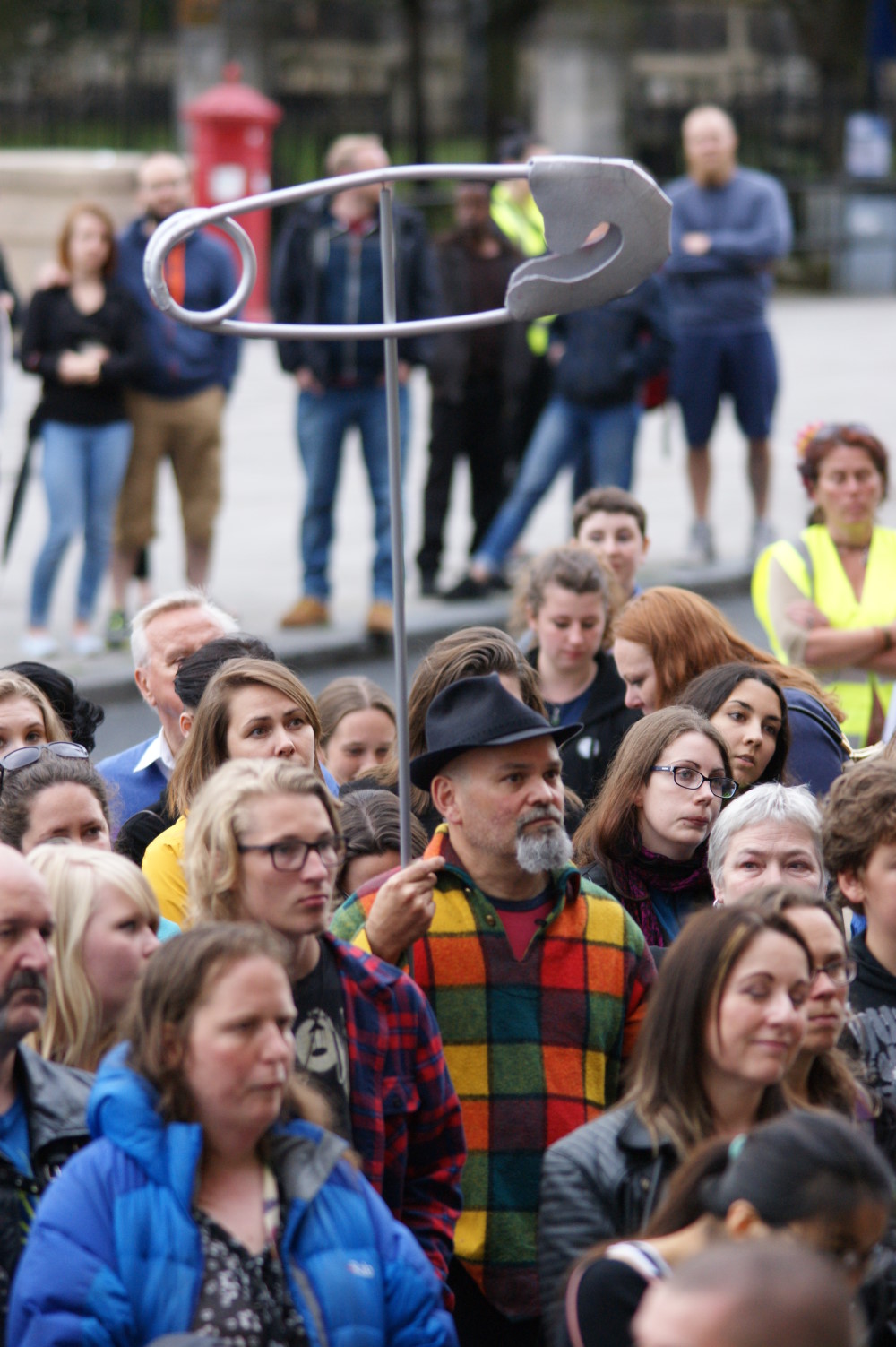
Solidarity With Migrants, Norwich, 12 July 2016 #SafetyPin
Solidarity With Migrants, Norwich, 12 July 2016 #SafetyPin – more photos here

Hate crimes have surged by 42% in England and Wales since the Brexit result, over 200 a day, the worst rise on record. Three race hate crimes an hour is three too many, especially when nine more per hour go unreported.

The UK needs to be at the forefront of offering opportunity and safety to all. Freedom of belief, expression, identity and speech, alongside freedom from poverty, persecution, FGM, homophobia, forced marriage, racism, and torture, these are the very foundations of a truly forward thinking country and culture.

Our Home Secretary will become our Prime Minister tomorrow, unopposed. She herself, though, has opposed immigration and despite after much petitioning reviewing asylum seeker processes continues to preside over conditions and interrogations of refugees that demand they prove their sexuality and threats at home in invasive ways.

Theresa May may have Tory ‘Maymentum’, and Momentum may have a meeting tonight amidst Labour’s leadership woes, but we here in Norwich have migrant momentum, maintaining Norwich’s place as a growing city of cultural and international diversity, safety, and welcome. Here’s what the City Council have to say:

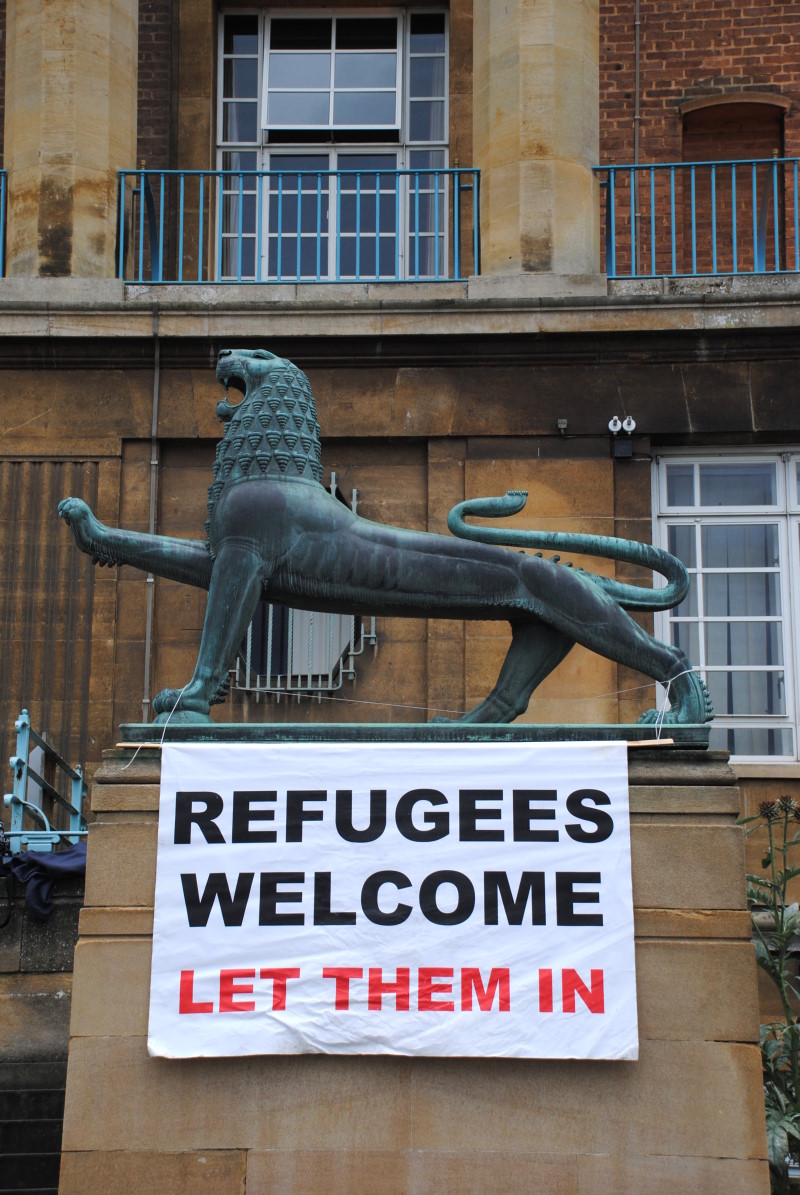
Solidarity With Migrants, Norwich, City Hall, 12 July 2016
Solidarity With Migrants, Norwich, City Hall, 12 July 2016 – more photos here

“we, as people of Norwich, should be reminded and encouraged to take pride in our ethnic and cultural diversity and rejoice in what we can share with and learn from others. Above all, we should be on our guard against anything or anyone who sets out to destroy it. As an institution (Norwich City Council), which is an integral part of city life, we once more declare our abhorrence and utter rejection of any form of injustice and pledge ourselves anew to celebrating cultural diversity and to ensuring that all members of our city feel nurtured and embraced.” – NCC statement

Novel Gender Twists in Debut Crime Fiction Book He’s Gone by Alex Clare

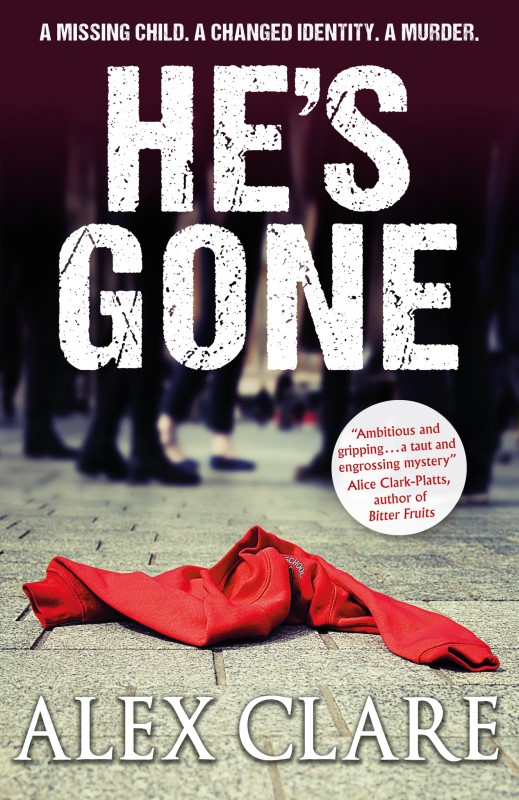
Alex Clare, He’s Gone

Hidden under the surface of an apparently everyday, even mundane at times, police procedural whodunnit, by new author Alex Clare, lie a handful of neat twists. The cleverest twist, encountered on its front cover, is the book title itself. The intentional double meaning of “He’s Gone” describes both the disappearance of a young kidnapped or killed boy, and the gender dysphoria and real life experience of a transitioning male-to-female lead detective.

“The double meaning in the title is quite deliberate. It’s meant to show that Robyn is here to stay.” – Alex Clare

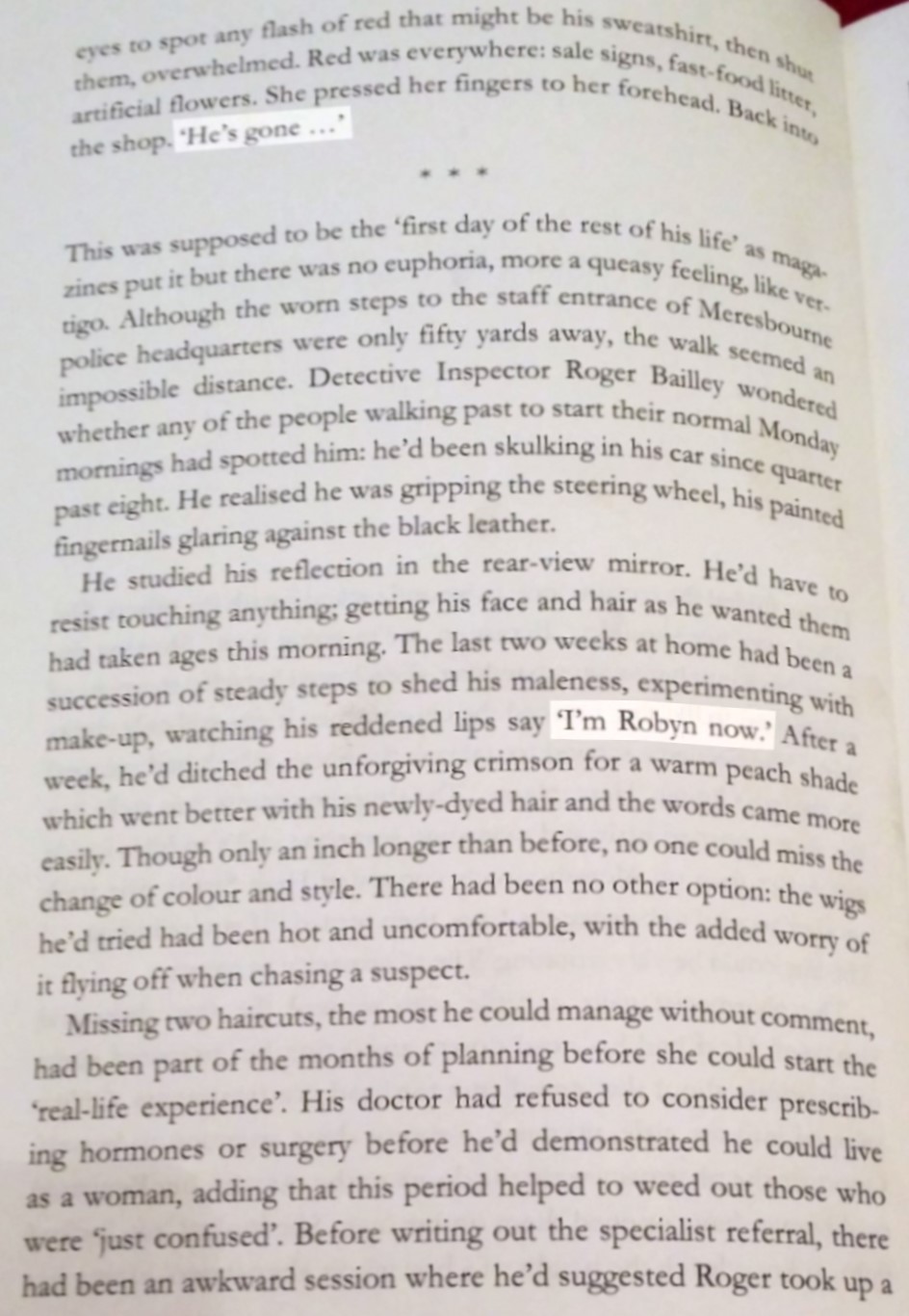
He's Gone, Alex Clare, p4Robyn was Detective Inspector Roger Bailley, that is, until the day they return to work as Robyn. Then, on their first day back at work, facing every trans person’s “Real Life Experience” (it used to be called a test) nightmare, they are launched into a missing persons case and on day two, a body is found. Now, that is not every trans person’s typical transition at work scenario. These two clashing worlds, Roger/Robyn’s inner one and the outer reality of a serious crime, are blended together well in this debut novel by, sometime corporate commuter, Alex Clare.

The focus on day-to-day details of police procedures, internal force politics, in-tray and waste bin descriptions, and fears of your boss and Professional Standards constantly checking your progress on both the crime(s) and your own transition at work, rooted Robyn in reality, not fantasy.

At times, that reality, as someone all too familiar with being transgender, was painfully raw and depressing. Being one of the first books to tackle this subject in fictional form with sensitivity, rather than exploitation as crossdressing serial killer or exotic sex object, makes it groundbreaking. Although there have been others such as Gore Vidal’s Myra Breckinridge (1968) and Patrick McCabe’s Breakfast on Pluto (1998), among a few more, they have tended to concentrate more on sexuality and the erotic rather than the practical dilemmas of transition itself.

The daily facing of colleagues, public, family, and the media, are treated well, and resonated as closer to fact than fiction. The constant sniping, media intrusion, initial family rejection, even the workplace bullying and transphobic vandalism, none of these are sensationalised but instead rather realistically realised.

Alex Clare, He's Gone, Crime FictionThe inspiration came, in 2013, from the author’s watching of the UK Parliament debating the Equal Marriage Act and the intensity of feeling it created. She, therefore, invented a fictional literary world to explore some of the issues and attitudes:

“Some of the opinions horrified me, people being defined and condemned by a single aspect of their life. The character of Robyn Bailley formed quickly in my mind and I’ve really enjoyed telling her story and what she has to face to live a normal life.” – Alex Clare, author of He’s Gone

The dilemma, for me as a very much non-conforming non-binary trans person, was that at times it plays into the hands of stereotyped trans tropes – the obsession with time spent in front of the mirror, makeup, clothing, voice, tucking, pronouns, name and ID documents. These are less criticisms than my personal preference for a gender non-conforming trans role model, even a fictional one, as some comic books have done. It is understandable, however, why these features have been described, and, on the whole, embedded without taking over from the book’s plot.

I did wonder at a few things including why her police warrant card had not been updated speedily by the police as part of her transition at work plan, and similarly that her Gender Identity counsellor “insisted on skirts” and make-up to “demonstrate she was living as a woman” (p.80). Advice that seemed about 3-4 years out of date. Such is the pace of NHS GIC improvement that sourcing reference material and other trans people’s experiences may already be dated, however much “some of the scenarios, … comments people make … and their reactions are taken from real life.”

“There is an active trans community on Twitter and I have read there about real-life experiences and the discrimination suffered. I’ve tried to reflect these in the book, like the example where Robyn is asked for ID before buying alcohol and doesn’t have anything that gives her new name.” – Alex Clare, Interview in OmniMystery News

Other minor details, on the other hand, were eerily and sometimes humorously accurate, such as forgetting that women’s clothes tend to fasten and button the other way, or that their suits tend to lack pockets. These were gentle insights that I remember well. I’ve since made a point of buying women’s clothes with decent pockets as smartphones do not fit inside your bra these days!

I imagine, for many readers, it may feel as though turning the pages of this book gives insights into the lives and emotional discomfort of many trans people, and it does – but there’s not just one type of trans person, and there are, indeed, many trans police officers, as well as trans prison officers, fire and rescue officers, and perhaps up to 1% of people in all walks of life who experience some form of gender dysphoria that may lead to hormonal and/or surgical transition.

I would love to see Robyn’s character develop, for her to touch base with trans support groups and find peer advice. I certainly went through a phase of obsessing over hyper-feminine stereotyped presentation myself, fortunately for me it lasted barely six weeks before I discovered Dr Martens and comfortable clothes! Robyn’s own transitioning at work journey is just 10 days old by the end of the book so I am being somewhat hyper-critical in expecting much evolution of trans personal awareness or feminism 101 in that short timeframe.

The first plot twist, with respect to the crime itself, I didn’t see coming, but the second I guessed straight away, but then watching it play out and come up with the proof was interesting. I found the mid-book anti-climax like a reboot, and the second half more interesting than the first from a crime fiction point of view, and by which time characters were more fully developed. I particularly liked the allusions to a cultish religious group and its holier than thou attitudes to difference and morality. Having once been a part of such beliefs and then been on the receiving end of them, they resonated, painfully.

“How do you find a missing child when his mother doesn’t believe you have the right to even exist?” – He’s Gone, back cover

It was great to see a preponderance of female leads as victims, suspects, investigators, family members and secondary characters. It also made a change not to have a heterosexual partners sub-plot, whether as cop-buddies or romantic liaison constantly making it about sexual friction and frisson. Instead, it was about Robyn internal relationship with her trans self and her external dealings with fellow police officers and colleagues, not to mention the rather awful mother of the missing child whom you end up thinking doesn’t deserve to have her son back. As another reviewer described her, “singularly one of the most deeply unpleasant individuals that one could encounter”.

As a character, I felt Robyn needed an ally, someone to confide in and talk to about her feelings and struggles. The dialogue, advice, emotions and humour that that might provide would supply some relief from her inner torture and the laboured process of the Police investigation. Her relationship with her daughter, though, was well portrayed as she struggled slowly to accept her father’s transition. Perhaps, she might become an ally in future books, along with a work colleague? I look forward to reading their future character arcs and seeing how DI Robyn Bailley develops.


For further details about gender identity dysphoria and transgender workplace issues visit www.genderagenda.net and also the National Trans Police Association (NTPA). Thanks to the publisher Impress Books for the ARC review copy of the book which you will find available from 1 August on Amazon and in book stores. A couple of other reviews from the Blog Tour can be found here.


Bastille Day Reign of Terror in Nice, France – Liberté, égalité, fraternité

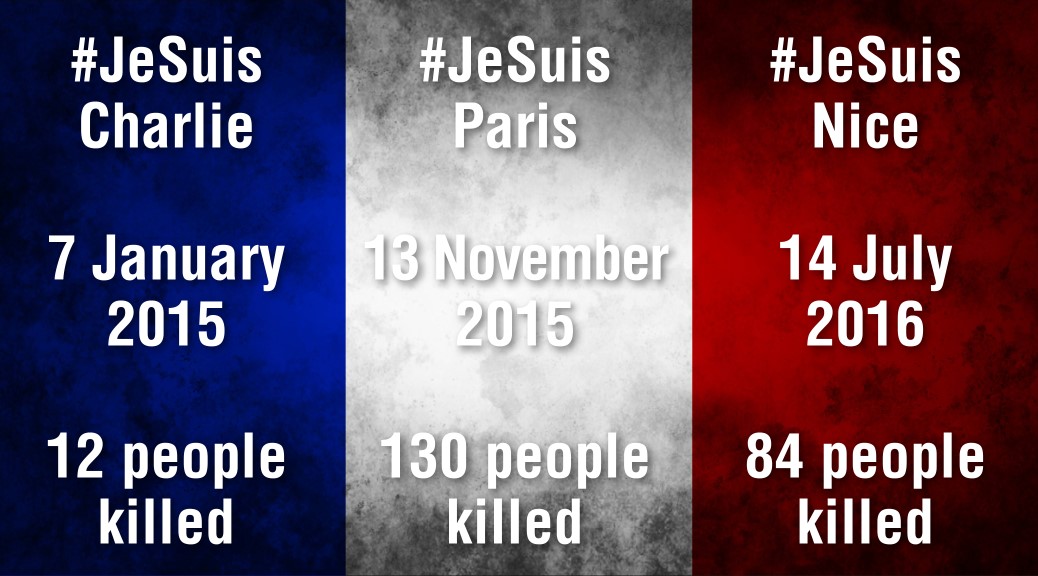
Terror claims 84 lives in Nice, France

During Bastille Day celebrations in Nice, a French-Tunisian has used a 19-tonne lorry to mow down revellers and civilians, and to shoot at police before he was killed himself. This is France’s second large-scale terror atrocity in 8 months since Paris’ Bataclan and third since Charlie Hebdo. Whilst Liberté, égalité, fraternité (ou la mort) was the cry of the French Revolution and last night’s revelries, life and liberty have been taken from many, including 10 children, due to someone’s lack of belief in equality and fraternity.

French flag 3 terror attacks, Charlie Hebdo, Paris Bataclan, Nice
Three terror attacks in 18 months: Charlie Hebdo, Paris Bataclan, Nice

It is time to assert our common humanity and not ideological differences, although the exact motivation and any affiliation of the heinous act are not yet known. Neighbours described Mohamed Lahouaiej-Bouhlel as a divorced loner who was not evidently religious, nor had any known terrorist leanings according to security services. Yet, people are jumping to condemn Islam, Muslims, immigration, rather than the possibilty of his being a ‘lone wolf’ attacker or disturbed individual.

French prime minister, Manuel Valls, said in a statement:

“We are facing a war that terrorism has started against us. The objective of the terrorists is to instil fear and panic…Times have changed and we should learn to live with terrorism. We have to show solidarity and collective calm. France has been hit in its soul on 14 July, our national day. They wanted to attack the unity of the French nation. The only dignified response is that France will remain loyal to the spirit of 14 July and its values.” – Manuel Valls

President of the Nice region, Christian Estrosi, has held a press conference, in which he said:

“This is the worst catastrophe our region has seen in modern history. We now have to mobilise all of our services, all the psychologists, volunteers who are trained to help fellow human beings. We will work with the imams, priests and rabbis who will also join us to help the victims and families who are suffering and will probably never heal their wounds … I want to thank people who welcomed passersby and those people who show us tonight that hopefully, solidarity still exists in a world that is too egoistical and individualistic.” – Christian Estrosi

Jump to my personal response.

National & International Responses

Kneejerk responses have followed, with not a little emphasis on the ‘jerk’, coming from Donald Trump, “declaring war on terrorism” – we are here in part due to Bush’s “war on terror” and the criminal targeting and bombing of countries not individuals and ideologies. Trump also called for “extreme vetting”, a ban on immigration from terrorist countries and when challenged about home-grown terrorism, such as Orlando, said that “second generation” immigrants were “very bad” too.

Front National‘s leader, Marine Le Pen, speaking to Le Figaro called for “the closure of salafist mosques” amongst other right wing responses including this: “The war against the scourge of Islamic fundamentalism has not started, it is urgent now to declare”, all that before any evidence it was extremist Islamist.

Meanwhile, President’s Hollande’s threat to scale-up French intervention in Syria and Iraq, is incendiary and not helpful.

Germany and Italy have ordered tighter border controls with France.

Theresa May said a similar attack in the UK was “highly likely” and called for new police powers. She said that “The United Kingdom stands shoulder to shoulder with France”, well shoulder to shoulder in the future from outside the European Union. What a time to be leaving. The European Arrest Warrant applies to all 28 EU nations plus Norway and Switzerland, but obviously not Canada – the Single European Market model that David Davis, Brexit Minister, is in favour of adopting.

Jeremy Corbyn, on behalf of the Labour Party said this:

“Those killed yesterday will doubtless have been of different religions, ethnicities and nationalities. It was an attack on us all, attempting to set people against each other. That is why instead, we stand together, now and always, in defense of tolerance, peace and justice.” – Jeremy Corbyn

Jump to my personal response.

Social Media Response

Social Media was using numerous hashtags to stay up to date with the attack and offer support: #NiceAttack, ‪#‎JeSuisNice,‬ ‪#‎PrayForNice,‬ ‪#‎PortesOuvertesNice‬.

I have to admit to having a problem with #PrayForNice. Prayer doesn’t stop hate, indeed some prayers – Jewish, Christian and Muslim, incentivise it. Loving action stops hate. Loving acceptance, prevents it breeding in the first place.

Newspaper Headlines

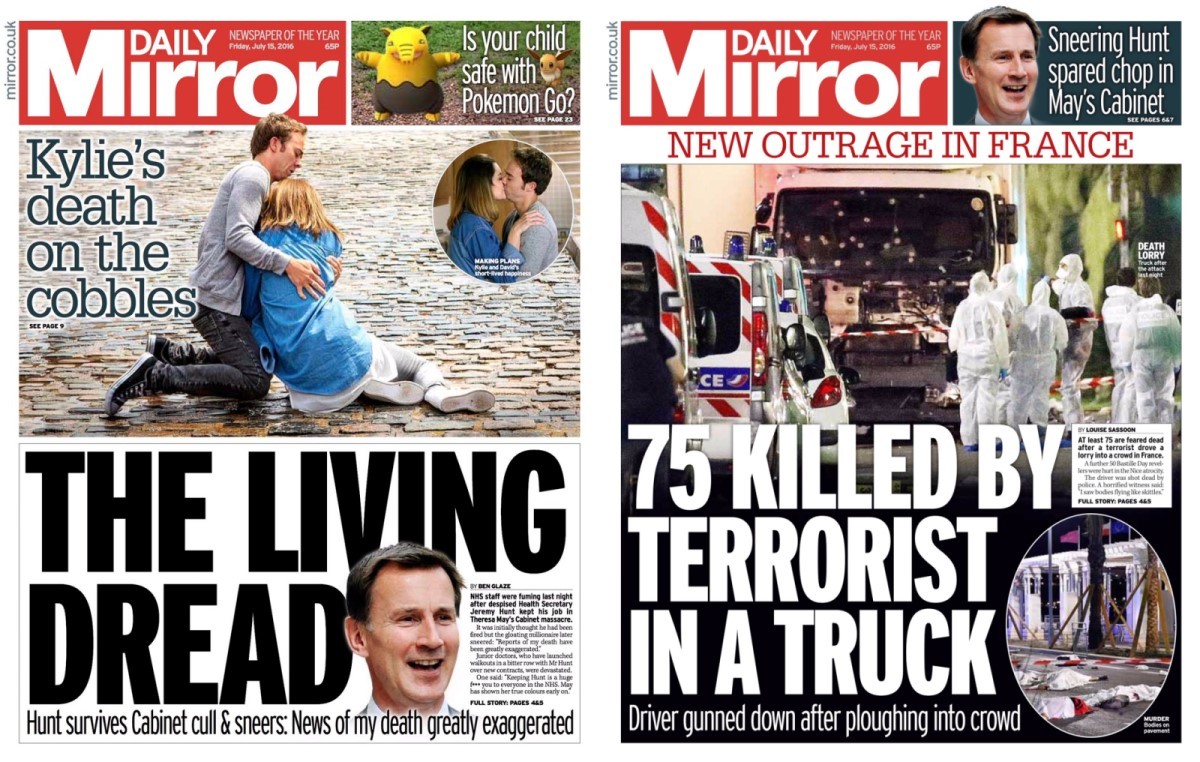
Torn between “Tour de Farce” and Tory reshuffle headlines the newspapers couldn’t pull their first editions quick enough. Headline writers were regretting their already gone-to-print titles that ran with Brexit bloodbath or Cabinet massacre, etc. Political careers cut short, would seem so facile by the second editions which carried details of the actual bloodbath and massacre in ‪#Nice‬.

Sports pages ran with “Tour de Farce” and described Froome being “forced to run as crowds cause Tour farce” meanwhile in Nice crowds were running for their lives from a lorry and its driver intent on running or gunning them down.

“We left just before the truck came and then I looked out of the window and saw a river of people running and crying. It looked like the apocalypse but I didn’t know what was going on.” – Leila Pasini

Business paper City A.M. ran with an image of sniper’s crosshairs describing Theresa May’s “taking aim at Whitehall departments”

The Daily Mirror initially had a Coronation Street storyline about the death of Kylie Platt on the street’s cobbles – rather too close to people lying dead on the streets of Nice. Beneath that, it had Jeremy Hunt boasting about rumours of his (political) death being greatly exaggerated.

Daily Mirror 15 July 2016 front page first second editions
Daily Mirror 15 July 2016 front page first v second editions

Sailing By & Shipping Forecast Calm

My own reflections on Nice went through a distant relative grief process, as I feel a European more than a Brit and spoke at a Charlie Hebdo memorial in January last year. After the sadness and anger,  needed catharsis – and for that I turned to writing and the shipping forecast!

My first response was to keep up with the news barrage, mainly over social media and the Guardian live updates which trumped the BBC for immediacy. Sucked in like a Stockholm Syndrome victim it became hard to pull away from the uncertainty of whether it was over or was it only the beginning of multiple attacks. After several hours and the final midnight news broadcast, I ended up listening to BBC Radio 4’s “Sailing By” and the Shipping Forecast for their mundane reassurance that the world hadn’t gone mad, or had it? At least with the weather, a storm blows out, a flood abates, but the escalation of extremist terror seems to just keep coming like an undead zombie horde amidst a Game of Thrones winter.

Blame brought no resolution, nor is revolution and fresh invasion of the axes of evil. Evolution, on the other hand, is. Not a survival of the fittest, the ones with the biggest guns, cruelest views, etc, but an evolution of recognition of our common humanity, fellow human rights, freedoms to coexist, communicate, collaborate, learn from and love each other, irrespective of creed, colour, gender or sexuality.

A month ago, I spoke at an Orlando vigil and quoted MLK whose words remain as true as ever:

“Returning hate for hate multiplies hate, adding deeper darkness to a night already devoid of stars. Darkness cannot drive out darkness; only light can do that. Hate cannot drive out hate, only love can do that.” – Martin Luther King

Pulp‘s Jarvis Cocker chose “Sailing By” as one of his Desert Island Discs, saying for many years that he’d used it “as an aid to restful sleep”

After the sadness and the solace came the guilt that I couldn’t pull away from other people’s pain, that what was real and terrifying for them was a distance news addiction for me. That each individual loss or injury was just a journalistic bean counter increasing and updating as the night dragged on. I had also begun writing and reflecting upon Baghdad’s worst ever post-war atrocity and not been able to post it or a #JeSuisBaghdad update as I’d done before because I was embedded in the outcome of the EU Referendum and pro-EU and anti-hate rallies ever since.

How do I go outside tomorrow and look at the sky, the birds, a flower, and regain my faith in humanity, in human nature? I don’t believe in a biblical Fall anymore, but are we not fallen, flawed?

Fortunately, my faith in humankind is renewed by acts of love and community, as when people rallied round the arson-attacked Eastern European shop on Magdalen St in Norwich, when 200 lovebombed the store, when 400 showed up to support Norwich migrant communities this week, when 2000 peacefully countered and overwhelmed an EDL demonstration in 2012 here.

Like as morning follows night, so my hope will rise anew with the dawn, well perhaps a little later, around coffee time…

Je Suis Tous Le Monde

What is happening in Nice happens nearly every day in Iraq, frequently in Syria, increasingly often in Turkey, and worryingly 3 times in 18 months in France.

Writing, speaking, lecturing, talks, humour, comedy, quotes, inspiration, motivation, mental health, disability, LGBTIQA+, equality, human rights, art, photography, life journey…

best herbal supplements sex drive cbd gummies and erection extenze fast acting male enhancement long lasting sex without pills top gun male enhancement pills safety of rlx male enhancement does maca root help with sex drive rhino 200k pill review male sex pills onenight stand over the counter penis enlargement pills pills for stronger erection otc alpha q male enhancement reviews 10 pack male enhancement pills top 10 natural erection pills medically enlarging a penis does male enhancement stiff nights work what drugs can help with erectile dysfunction vegas strips male enhancement reviews diet while using ed pills consumer reports male enhancement productsedema from blood pressure medication low blood pressure reasons and treatment which blood pressure medications protect kidneys blood pressure medications and weight gain alcortin blood pressure medication what is a cheaper version of bystolic blood pressure medication blood pressure medication at night time cinnamon blood pressure medication b blood pressure medication how to lower high blood pressure fast without medication naturally low blood pressure and chicago medical proven ways to lower your blood pressure without medication high blood pressure medication clonidine what are common side effects of high blood pressure medication medications taken for high blood pressure do high blood pressure medications thin the blood high blood pressure hypertension diagnosis and treatment mayo mayo clinic accent seasoning and blood pressure medication prednisone and blood pressure medication can i just stop taking my blood pressure pills